
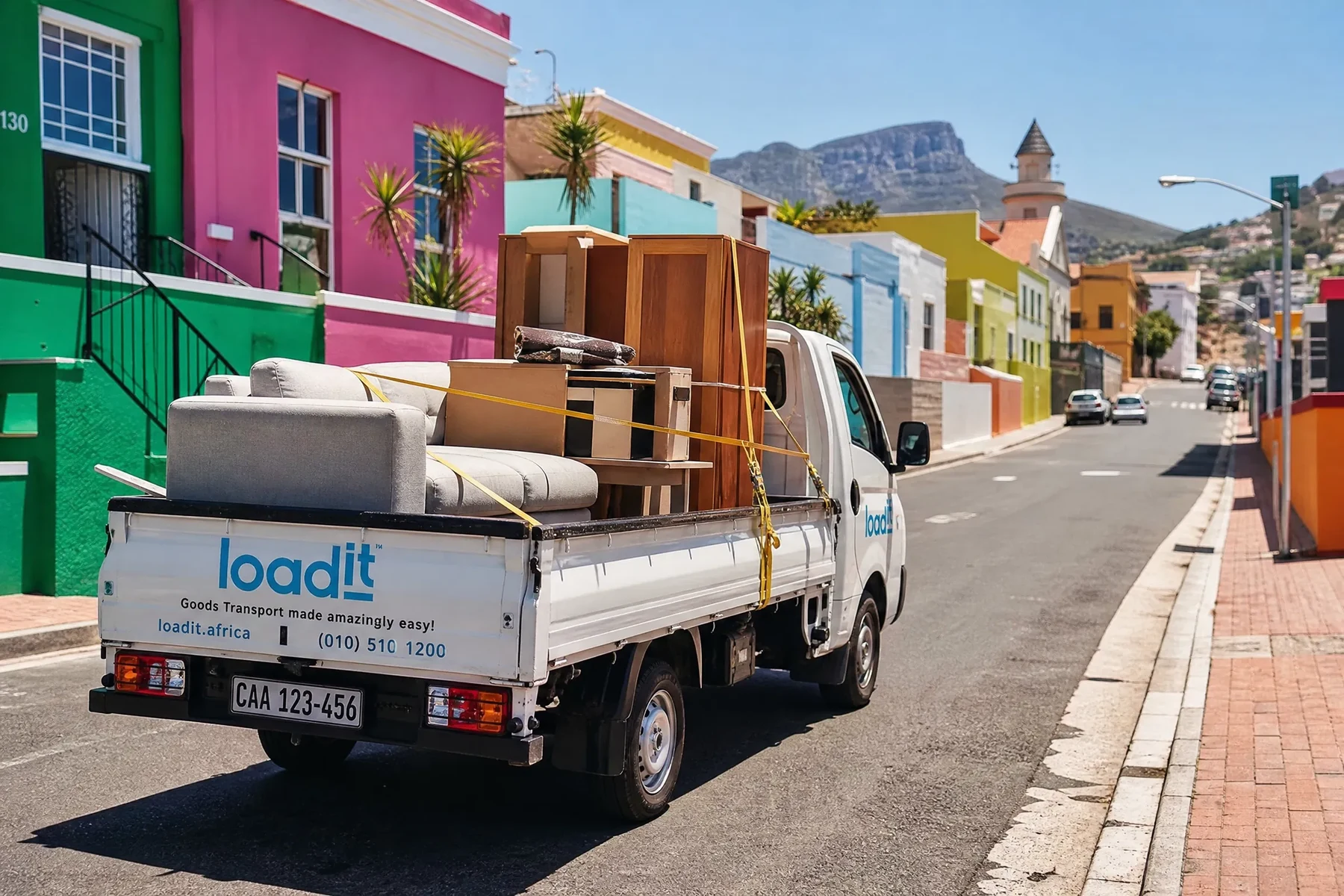
Loadit has found the awkward middle ground South Africans deal with all the time: you do not need a full moving company, but you absolutely cannot fit a couch, fridge, or office printer into the back of a hatchback and hope for the best. The platform gives people and businesses a way to book the right truck or bakkie, with a driver and help if needed, without turning a simple delivery into a logistics headache.
That puts it in a useful lane. A single Facebook Marketplace pickup, a student flat move, a last-minute stock transfer, a branch relocation, a storage run, all of these jobs are too big for ordinary transport and too small, too urgent, or too irregular for the old-school mover model. For readers scanning Truck & Bakkie Hire, the appeal is obvious, because Loadit is built around exactly that messy in-between space.
South Africa’s goods version of ride-hailing
Loadit launched in May 2017 and still uses the simplest possible description of what it does: it connects customers with trucks, bakkies, drivers, and helpers on demand. That sounds obvious until you compare it with how moving usually works. Traditional movers want long lead times, lists, deposits, and a job big enough to justify the paperwork. Loadit is built for the jobs that happen because life happened first.
The company says it works with approved small businesses rather than trying to own every vehicle and person in the chain itself. That matters. It keeps the platform lighter, more flexible, and much closer to the way people actually need transport in South Africa. If you need one couch moved this afternoon, you do not want to pay for a full relocation apparatus to show up and perform a theatre piece around your couch.
Loadit also claims serious volume behind the pitch. The platform says it has handled more than 40,000 trips, and its Google profile shows a 4.9 rating from 1,944 reviews. Those are not meaningless vanity numbers. They tell you the service has been used often enough to be judged by people who had furniture, deadlines, and very little patience.
The jobs it is built for
The service covers both home and business transport, but the consumer use cases are the easiest to understand. Homeowners, tenants, students, and families use it for full household removals, apartment moves, townhouse moves, estate moves, student accommodation moves, retirement village relocations, and storage unit moves. That list is broad because people’s lives are broad. A move is not always a cape-and-carpet drama. Sometimes it is a bed, a wardrobe, three boxes, and a washing machine.
That same logic applies to single-item transport. Loadit says a big slice of its business is furniture movement rather than full removals. A fridge from a seller in Randburg. A dining table from a warehouse in Cape Town. A couch from Gumtree. A bed from Facebook Marketplace. A washing machine from a retailer. These are the kinds of jobs that look small until you try to solve them without a suitable vehicle.
Businesses use the platform differently. Office moves, internal relocations, branch transfers, archive runs, IT equipment transport, supplier collections, stock transfers, warehouse movements, customer deliveries, and retail deliveries all sit inside the Loadit model. The more repetitive the job, the clearer the value proposition becomes. You do not need to own a delivery fleet to move products out the door every day, and you do not need to build a permanent logistics department just to get through a busy week.
Vehicles and help that fit the job
Loadit’s fleet is intentionally mixed. On the bakkie side, it offers half-ton vehicles, the NP200-style class, and 1-ton bakkies. These are the practical choice for small loads, appliances, and lighter furniture. For larger moves, the platform includes 1-ton trucks, 1.5-ton trucks, 3-ton trucks, and 8-ton trucks.
That spread matters more than it sounds. South African consumers are used to services that overshoot the job, sending too much vehicle for too little cargo. Loadit’s model lets people book a size that actually fits the load, which is where a lot of the savings live.
The assistance options are just as important. Depending on the booking, customers can request a driver only, a driver and helper, multiple helpers, loading support, offloading support, stairs assistance, and heavy lifting. Anyone who has carried a fridge up a narrow staircase will understand why that list belongs in the product description, not hidden in a FAQ.
Why businesses keep using it
Loadit splits its business offering into two clear tiers. Loadit Essential is for ad hoc or urgent delivery work. It runs 24/7, supports self-booking online, includes SMS notifications, real-time tracking, PODs, historical records, and can be booked with extra helpers for loading and offloading. It also offers goods cover subject to terms and conditions, which is the sort of detail that matters when a delivery is not just a delivery but a balance sheet line.
Loadit Pro is the more managed version. It is aimed at businesses with multiple deliveries per day, custom routing, scheduling, warehouse storage needs, and longer-haul transport. The company says it can consolidate trips with other customers to reduce costs, and it also mentions flexible payment terms and BBBEE points on request. That makes the product feel less like a one-off transport app and more like a practical logistics layer for smaller South African companies that do not want the burden of running everything themselves.
The pitch gets more credible when you look at the industries it says it serves. Furniture, plumbing, timber, building materials, events, solar, food production, retail, medical facilities, tourism, hospitality, restaurant supply, and industrial work all show up. That is not random padding. It shows the service is built around bulky, inconvenient, physical goods, the stuff that never fits neatly into a standard courier basket.
Where it actually works
Loadit says its strongest footprint is in Gauteng, especially Johannesburg, Pretoria, Centurion, Midrand, Randburg, Sandton, and Roodepoort. It also operates in Cape Town, including the Southern Suburbs, Northern Suburbs, and the Atlantic Seaboard, plus Durban and surrounding parts of KwaZulu-Natal. Expansion is still ongoing, but the current map already covers the country’s busiest consumer and business corridors.
That regional spread is part of the product’s usefulness. A service like this is only useful if it can show up where people actually live, buy, move, and trade. If you are a student shifting flats in Pretoria, a retail store in Cape Town, or a small business moving stock between warehouses in Gauteng, the platform is trying to solve the same problem with the same basic promise: book the right vehicle, get a driver, move the goods, carry on with your day.
Loadit works because it is aimed at the part of transport that conventional movers tend to overcomplicate and ordinary couriers cannot handle. For South Africans who keep needing “just one thing” moved, then three more things, then an entire office, that is the real market.